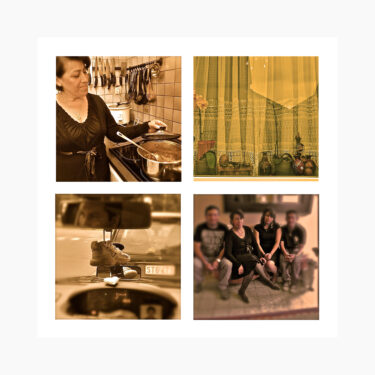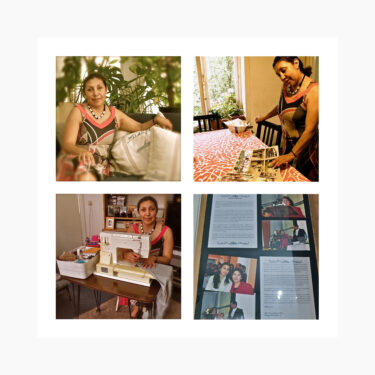
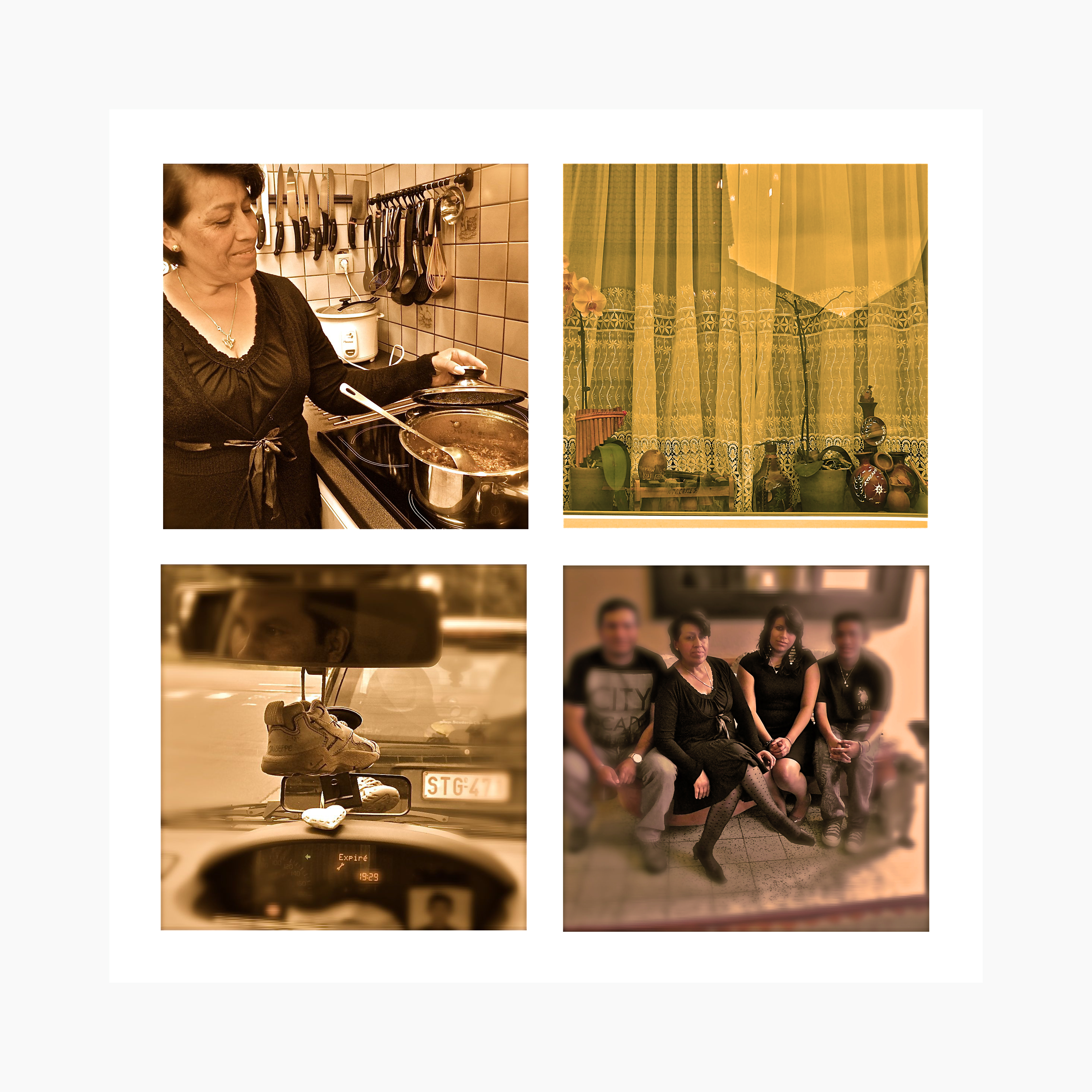
My Space is a photographic project bringing together portraits and personal accounts of ten Ecuadorian migrant women living in Belgium. The portraits were taken in their homes or workplaces, spaces each participant chose as her own and in which she recognised an essential part of her identity.
Through conversation and portraiture, the project explores the relationship between memory, migration, belonging, and identity. Everyday spaces become extensions of the body and personal history: intimate territories from which each woman reconstructs her connection to her place of origin and to the society that has welcomed her.
Rooted also in my own experience of migration to Brussels, the project approaches portraiture as a space of encounter between self and other, where individual identity is shaped through dialogue with collective experience.
Gloria
“When we left Ecuador, it was because of the terrible economic situation in the country… At that time, Ecuadorians did not need a visa. We said we were going on our honeymoon, even though we already had a child whom we left in the care of my mother. We thought we were going to London; it was only a week before our departure that we discovered our actual destination was Brussels… Already on the plane, I took off my boots because, back then, travelling meant dressing elegantly… but my feet became so swollen that I couldn’t put my boots back on again….”
Gloria, 47 years old
Nuria
“I left Ecuador out of desperation. My husband used to beat me, and I got divorced. But socially, being divorced was frowned upon, and I was considered a woman of loose morals. Besides, my ex-husband still believed he had rights over me, so I decided to flee. I told him I would leave our four children with him, and he didn’t object. He thought it would be better for me to leave and earn money.
When I arrived, supposedly at my sister-in-law’s home, she knew nothing about my arrival. Nobody was expecting me; nobody had told her. Eventually, she helped me find somewhere to live: a 3-by-3-metre room shared with thirteen other people. I was very naive, but thanks to hard work and determination, I now have my children with me.
The only thing that worries me is that I no longer belong entirely here or there. My children are losing their identity; they are caught between two worlds. But now, having struggled so hard to find my place in this society and knowing how difficult it can be, I help migrant organisations, offering my support and volunteering my time free of charge.”
Nuria, 47 years old