Tearing – Mending the Garments
Performance and participatory art project | 2018 – ongoing
Origins and conceptual framework
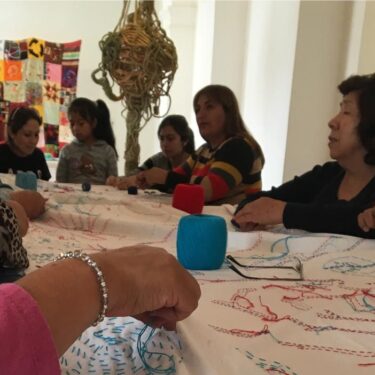
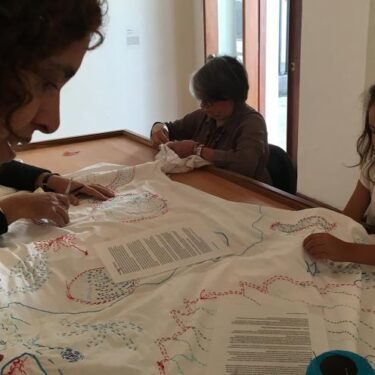
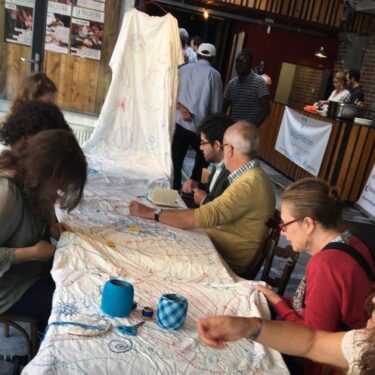
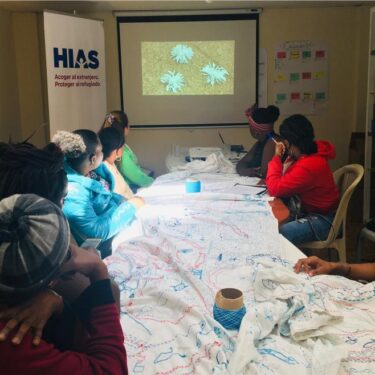
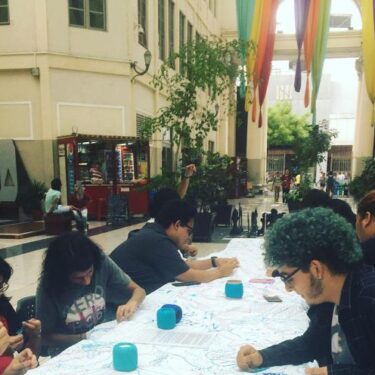
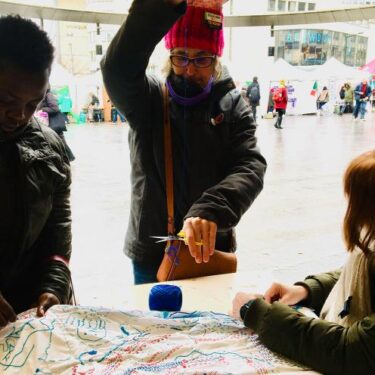
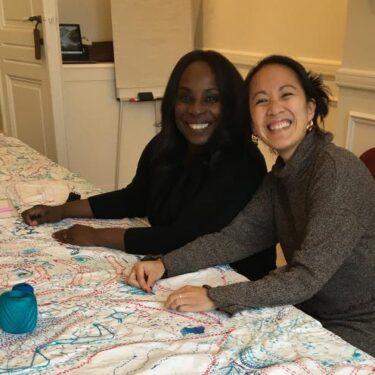
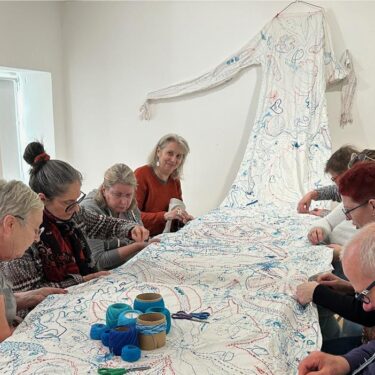
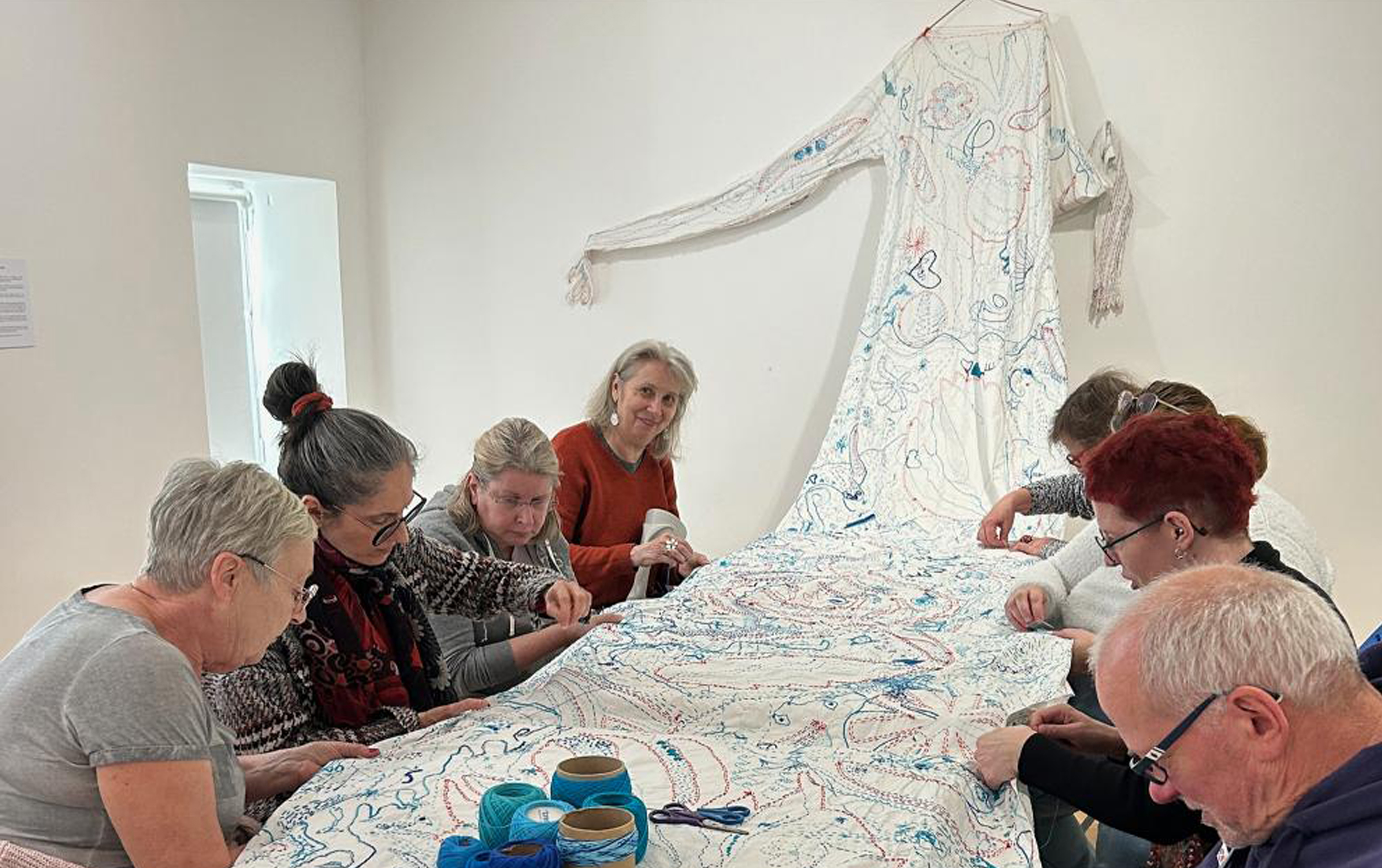
Originally, tearing one’s garments was a ritual gesture of grief and mourning, but also an expression of indignation and rebellion against injustice. This dual meaning — intimate sorrow and collective protest — forms the conceptual starting point of my project. The initial performance emerged from my research project Memory Beings, a series of porcelain works inspired by childhood memories, family bonds and, particularly, my father’s absence. The sea gradually became a central element, connecting personal memories with migration and human displacement. Tearing the garment thus evolved from an expression of grief into a gesture of protest against uprooting, loss, and the lack of solidarity towards migrants. From an intimate gesture to a collective project In 2018, in Belgium, I began making a dress for the exhibition Untangling the Threads of Memory. As the exhibition deadline approached, I invited some friends to help me complete it. While embroidering together, our conversations and the sharing of personal stories transformed this practical collaboration into an unexpected space for exchange, listening and connection. This experience revealed the collective potential of the work. Subsequently, during the exhibition Untangling the Threads of Memory, organised by La Emancipada as part of the Third Women and Art Festival in Ecuador, I proposed participatory embroidery workshops to continue this process and open it to other voices and experiences. This marked the transition from an intimate experience among friends to a broader collaborative project.
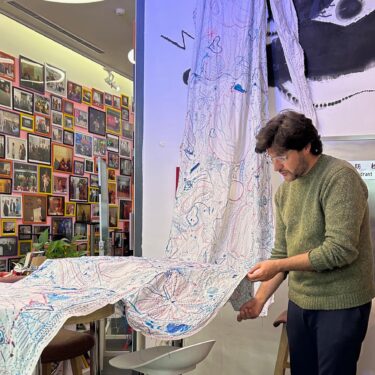
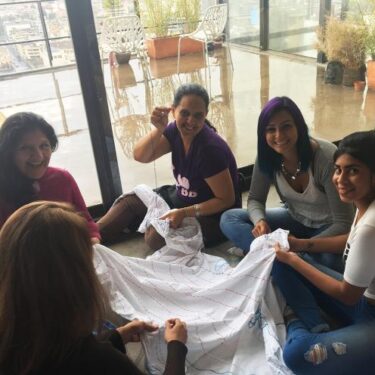
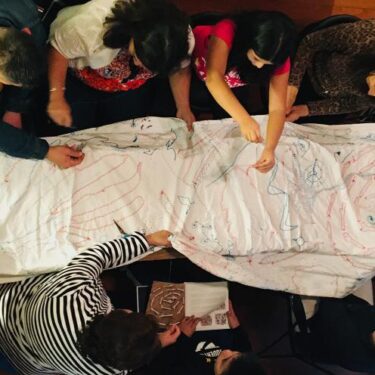
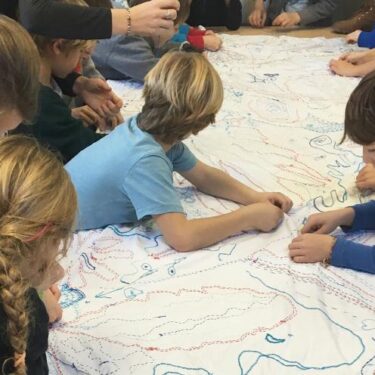
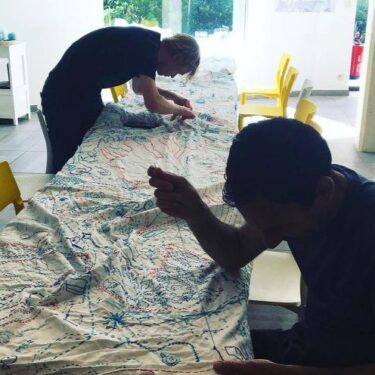
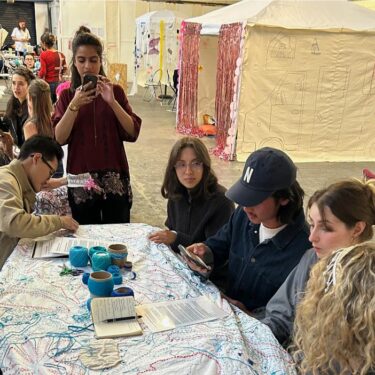
Since then, the dress has been embroidered and transformed by 655 participants through workshops and encounters in Ecuador, Belgium, the United States, France and England. Its journey continues in China, where new interventions and cultural experiences are being incorporated.
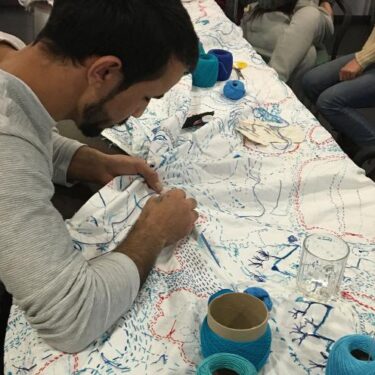
Each participant leaves a trace through their embroidery and personal story. Sewing and mending become symbolic gestures of reconstruction, remembrance and connection. Water, the sea and fluid forms create a visual thread linking individual memories with collective experiences of displacement.
Rather than simply representing migration, the work brings together the traces of those who have experienced it or reflected upon it. The dress becomes an evolving textile and human archive, exploring memory, loss, belonging and our capacity to rebuild ourselves, individually and collectively.